
Multi-drop, multi-times-a-day
A single garage may order parts three to six times in a day as new jobs land on the lift. Routes rebuild on the fly and the planner is never “done”.
Auto parts software matches the right part to the right vehicle and gets it to the garage the same day: the catalogue, every order channel, the multi-wave round and the ledger on one system.
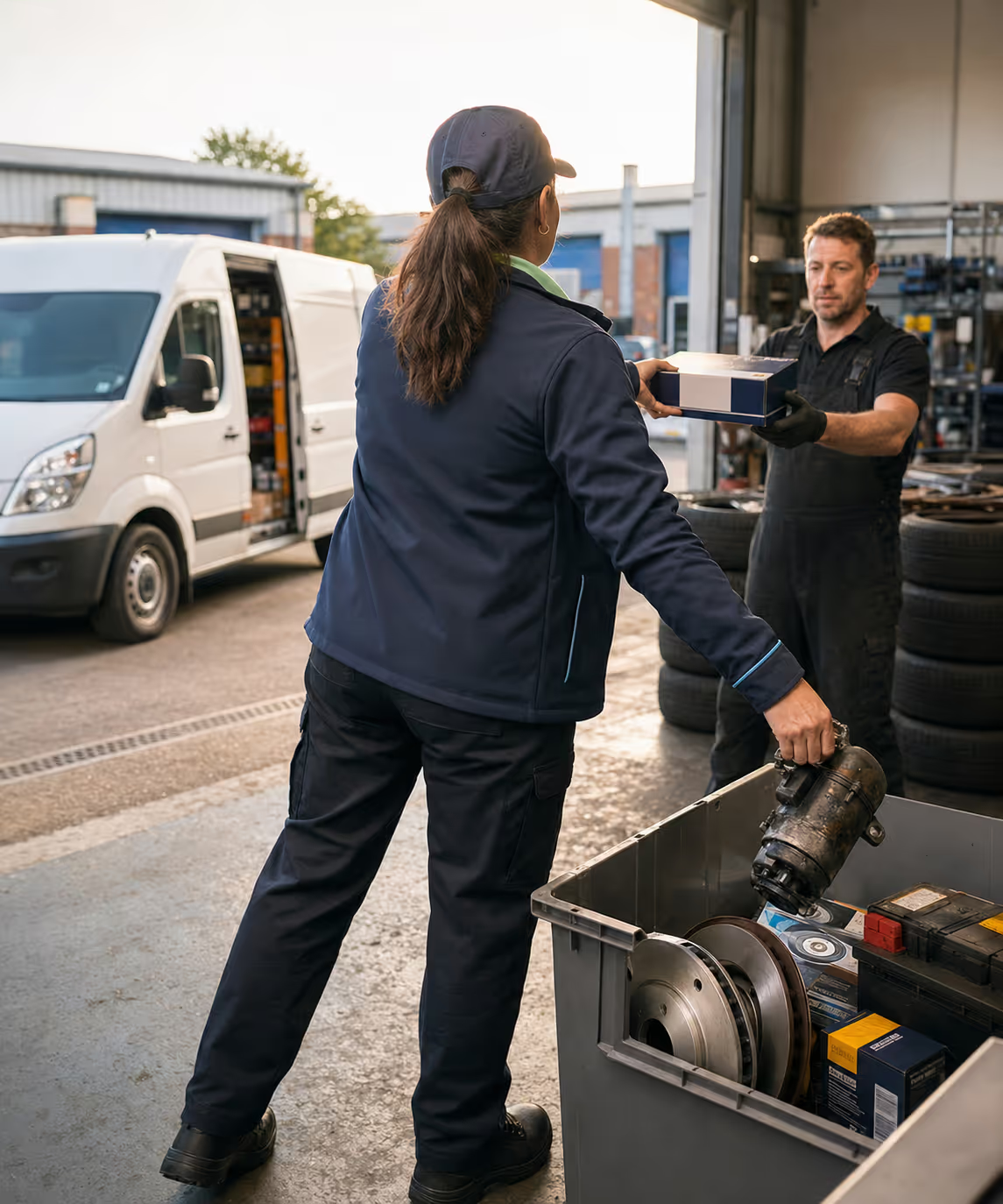
Parts, FMCG, food, animal-health and merchant trade, on the same platform.













The same problems show up across factors, tyre wholesalers and lubricant distributors.
A single garage may order parts three to six times in a day as new jobs land on the lift. Routes rebuild on the fly and the planner is never “done”.
Leading factors carry 100,000+ SKUs across OE (original-equipment), OE-quality and matching-quality fitments, with supersessions and multiple barcodes per part. The wrong fitment costs a return, a credit and a stalled job.
Returns and core exchange (alternators, starters, brake calipers, DPFs, batteries) can run 8–15% of value. Done on paper, the credit cycle drags and the garage queries every invoice.
Batteries, brake fluid, refrigerants and EV packs are dangerous goods; tyres stock at fit-centres just-in-time; lubricants ship in drums, IBCs and retail packs. One tool has to keep all of it straight.
Right part found, every barcode scanned, cores reconciled, all on one ledger.

Counter, telesales and portal write to one customer and stock, so every garage call lands in the same pipeline; overnight portal orders seed the first wave with a Source = CP flag.
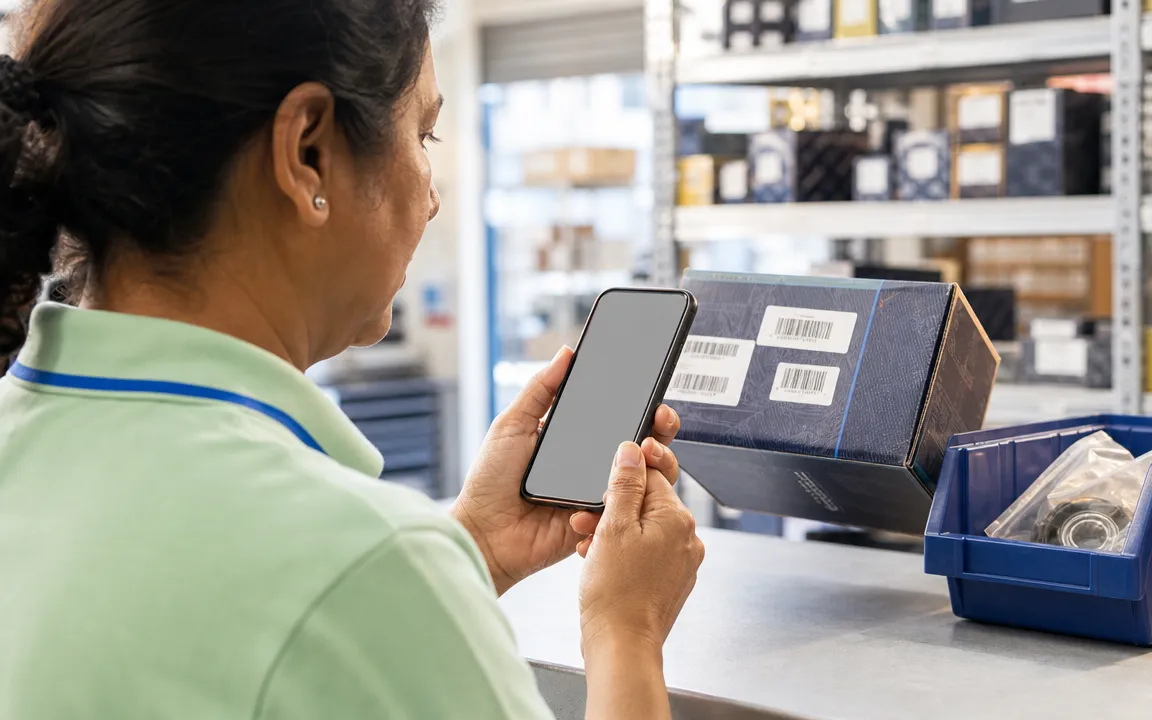
OE, internal, legacy and supersession codes resolve to one SKU before the line commits, and credit is checked at capture. Blocked garages stop there, not at the bay.

Every line is barcode-verified, with an unknown barcode raising a warning rather than a silent fallback, and high-value units (batteries, ECUs, EV packs) are serialised at load.

The route-optimisation engine sequences each VOR (vehicle-off-road) top-up wave by capacity while planners keep the override, and the next wave picks from the same screen: no handover, no re-keying, all day.
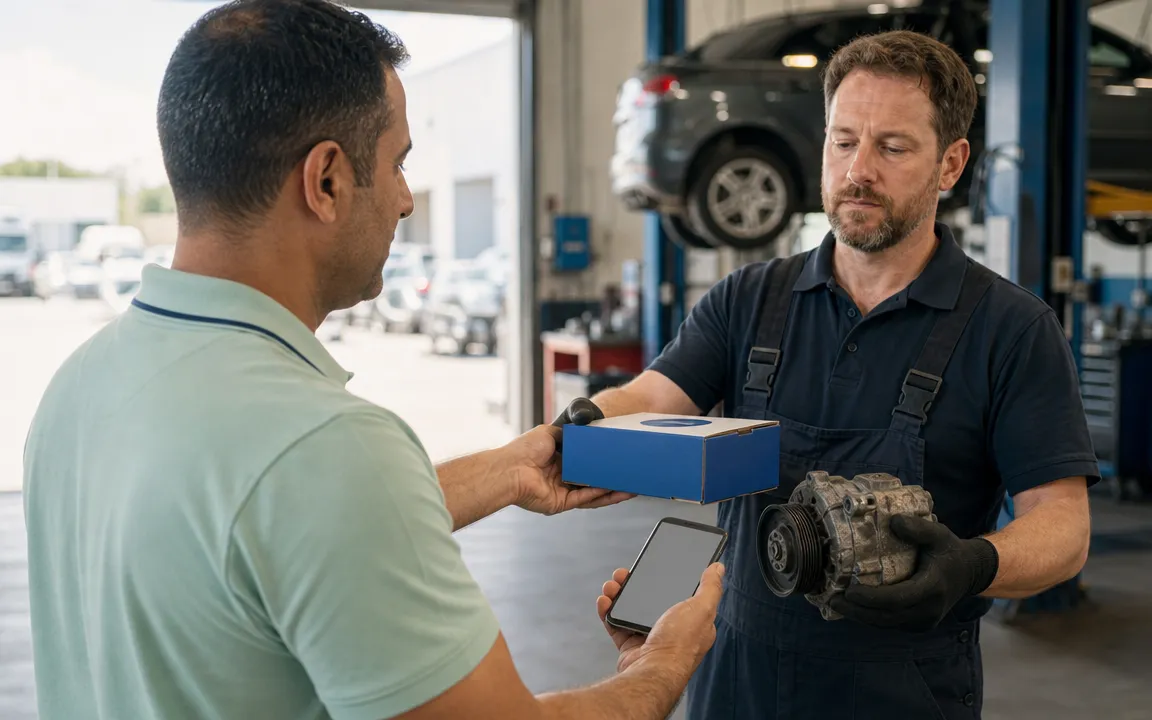
Every drop is signed, photographed and geo-stamped, so the POD PDF ends the “never got that part” argument, while cores reconcile against the deposit and clear cleanly.
Invoices, credit notes, deposits and payments post to the sales and purchase ledgers automatically with no re-keying, and Making Tax Digital (MTD) VAT is handled in the ledger or synced to Sage, Xero, QuickBooks, Tally or Zoho.

Live dashboards on stock and cash let you drill from the headline to the transaction, while demand forecasting feeds the morning top-up with per-product min/max from sales history.
Representative results from running the catalogue, the multi-wave garage round and the ledger on one platform.
About Roofing is a 12-van builders merchant running the same shape a motor factor lives with every day: trade-counter orders, multi-drop B2B rounds, contested deliveries and a paper-docket credit-cycle drag. After switching to RouteMagic ePOD, every drop captures a signature, photo and timestamp that lands instantly in the back office, cutting disputes over what was delivered by 18%, saving 2 hours a day on reconciliation, and clearing the cash-flow drag that holds up payment from the garage. 100% paperless proof of delivery across all 12 vans.


Capture standing orders, telesales, portal and counter calls on one backbone.

Deep SKU control with multi-barcode, IMEI/serial tracking, core deposits and traceable returns.

Demand forecasting for the morning top-up, route optimisation and end-of-day auto-reconciliation.

Plan same-day and next-day parts rounds by drop, van and delivery window, with a live map view.
The questions parts factors, tyre wholesalers and lubricant distributors ask us most often during evaluation.
A motor factor is a wholesale distributor of automotive parts that supplies garages, workshops and fast-fit centres rather than the public, buying from manufacturers and parts makers and delivering on multi-drop trade rounds. RouteMagic is built for that operation: catalogue, credit, the garage round, core returns and the ledger on one platform.
Parts distributors typically run an automotive ERP or dedicated auto parts software that ties together the parts catalogue, stock, trade pricing and credit, the delivery round and accounts. RouteMagic does all of that in one system (order capture, inventory management, the multi-drop round and order-to-cash accounting) instead of stitching a warehouse, a sales app and a separate accounts package together.
Auto parts inventory management means controlling stock at SKU and barcode level across 100,000+ fitments, resolving OE, internal, legacy and supersession codes to one part, and tracking high-value units and returnable cores individually. RouteMagic scans every line, serial-tracks units like batteries and ECUs, holds cores as deposit items, and feeds the morning top-up with per-product min/max from sales history. See inventory management.
An auto parts catalogue maps a vehicle (by registration / VRM lookup or VIN) and a part to the right SKU, with cross-referencing so an OE reference, a factor-internal code, a legacy code or a supersession all resolve to the same current part. RouteMagic carries up to five barcodes per product, so any of those codes scans to one SKU (at the warehouse, on the van or at the trade counter) with an unknown barcode raising a warning rather than a silent fallback.
Yes. The same platform suits a spare parts trading company in the UAE, Saudi Arabia or the wider GCC: multi-currency pricing, FTA-compliant tax invoicing, the catalogue and credit control, and the multi-drop delivery round. One system serves UK motor factors and Gulf spare parts traders without a separate build.
Yes. Wholesale Delivery, Van Sales and the Client Portal feed the same load-order screen, so a van returning to branch can pick the next wave and head straight back out. Live Route Monitor and geo-fenced arrivals keep dispatch in control as orders are inserted into in-flight routes.
IMEI/Serial Tracking follows each individual unit through a four-stage chain (warehouse, vehicle, retailer, end-user) with every status change logged for audit. Each IMEI is unique across the tenant; deactivating a product preserves the chain history so sold units stay traceable.
Yes. Cores and returnable cases are modelled as Deposit Items against the customer balance, with optional monthly holding charges to encourage timely return. When the core comes back on the next van it reconciles cleanly; damaged stock routes to quarantine and triggers a credit note automatically.
Yes. Each product can carry up to five barcodes, so OE references, factor-internal codes, legacy codes and supersession codes all resolve to the same SKU on a scan, whether at the warehouse, the van or the counter. No silent fallback: an unknown barcode raises a warning.
The driver app is offline-first. Routes, customers, products, prices and promotions download at the start of the day; every transaction writes locally and queues; a background sync pushes everything back when signal returns, with conflict resolution and no data loss.
Yes. Order Management captures orders from standing rounds, telesales, the Client Portal and the trade counter, all writing to one customer master and one stock position, so contract pricing and credit apply the same way whatever the channel. Portal orders carry a Source = CP flag for reporting and drop straight into the same sale-order pipeline.
Either. RouteMagic has a built-in accounting layer: sales and purchase ledger, nominal ledger, cashbook and bank reconciliation, MTD VAT, multi-company and multi-currency. If you prefer to keep your package, a configurable connector syncs invoices, credit notes, core deposits, payments and customers to Xero, QuickBooks, Sage 50, Sage 200, Tally, Zoho Books and Microsoft Dynamics 365, with field and tax mapping and its own sync log for audit.
Yes. Raise a purchase order with agreed prices and an expected date per line, send it for approval, email it to the motor factor or manufacturer, then receive against it so stock and cost land together. Purchase invoices, payments and credit notes sit on the same supplier ledger, so the daily top-up and the VOR special are handled where the sale is.
Thank you
Your request has been received.