Visit on plan
Geo check-in · 11:18
Last order 14 days ago
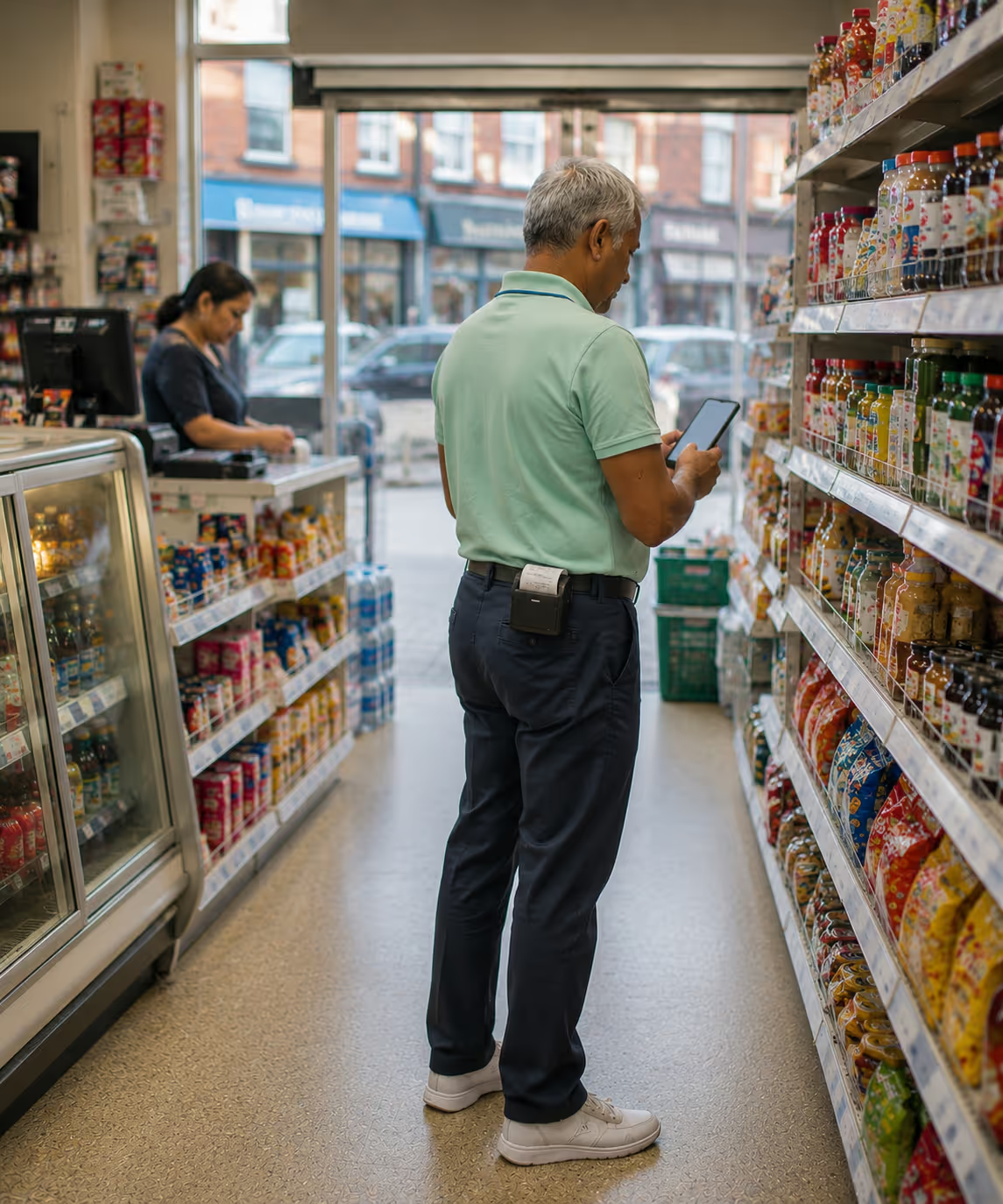
Field sales software runs the day for reps who sell without carrying stock: the call plan, the customer’s history and the order itself on one app. The warehouse picks and delivers whatever they book.
Trusted by businesses across the globe


















The same patterns show up in almost every field-sales team that still books orders on paper, and at least one of them is yours.
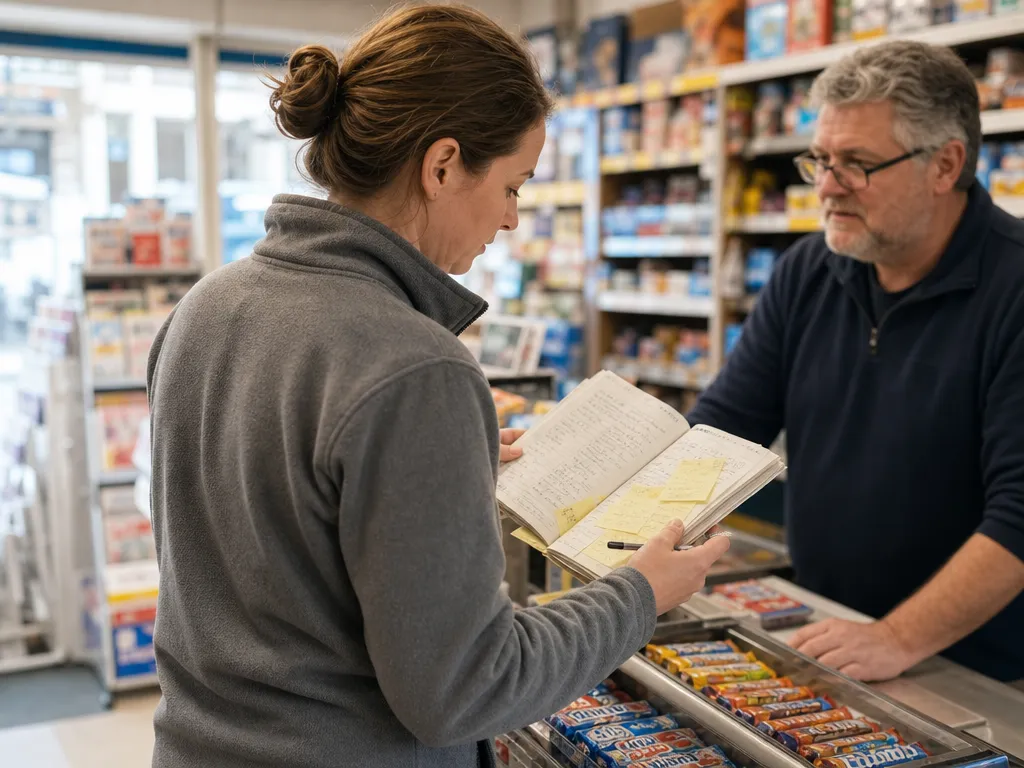
No live customer record, no ageing flag, no last-visit notes on the phone. The rep walks in cold, leans on memory, and asks the shopkeeper what they bought last time, then books an order against an account that was over its credit limit a fortnight ago.

Order books, WhatsApp photos, late-night data entry. By the time the warehouse sees it, the morning load has gone out without it, and the customer waits another day.

Reps say they hit 25 outlets a day; the back office cannot tell which 25. No geo, no timestamp, no plan-vs-actual. Just a beat plan that lives on a clipboard.

Returns, credit notes, mid-cycle rule changes, all reconciled by hand on a spreadsheet. Three days every month spent re-litigating who sold what, and to whom.
Sales-force-automation software purpose-built for the rep who books orders, not retrofitted from a delivery tool.

Beats, sequences, standing orders and today’s promos load before the rep leaves home. The day is set, not improvised, and the route is cached for no-signal beats.

The customer record, history and planogram are all in hand, so every merchandising visit is fully briefed. Share-of-shelf, surveys and photo proof are captured offline, with no signal needed at the shelf.

Forward and suggested orders are booked at the door, promo-aware and credit-checked. Each one is priced right the first time, with no back-office correction later.

Plan-vs-actual coverage is measured from a geo-stamped check-in on every call. No-access calls are captured with a reason, so you can prove coverage and retail-execution standards across the estate.

Commission runs daily and returns-aware, so month-end disputes disappear. The leaderboard refreshes each day, so reps see where they stand.

One live customer record behind every visit, so the rep arrives with the balance, the pricelist and the last order already on screen. Credit is checked as the order is built, not at month-end, so an over-limit account is caught before the rep promises anything.
Real numbers from live field-sales rollouts.
Bits ’N’ Bobs ran their reps on paper run-sheets and phone calls: no live coverage, no audit trail, no way to tell which 25 outlets had been visited and which had been skipped. With RouteMagic, every visit is geo + time stamped, every order syncs to the warehouse in minutes, and back-office dispatchers monitor the whole beat through the Route Monitor in real time. Two-to-three hours of daily paperwork came back, and stock shrinkage that had been running at 14% was eliminated.

Pre-sales reps live or die by coverage and order capture. Find your sector to see how Field Sales fits.
| Capability | Paper / spreadsheet stack | RouteMagic Field Sales |
|---|---|---|
| Coverage proof | Reps say 25 visits; back office cannot tell which. | Geo + time stamped check-in, plan-vs-actual daily. |
| Order-to-warehouse | Paper books, WhatsApp photos, late-night data entry. | Forward Orders sync in minutes; pick before the next stop. |
| Pricing discipline | Stale lists, ad-hoc overrides, margin floors crossed. | Per-customer pricelists, margin-floor enforced at the door. |
| Merchandising & surveys | Tick-box sheets, no photo proof, no audit trail. | Planogram, share-of-shelf and survey captured against every visit. |
| No-access handling | Rep tells the manager later, if at all. | Reasoned + flagged; territory manager sees it same day. |
| Commission disputes | 3 days a month to resolve. | ~1 hour, returns-aware engine, daily payout. |
Start on the plan that fits today and move up as you grow. Same platform, same data.
£29/ monthly / user
The starter plan, with essential capabilities to get a single team up and running.
Get Started£39/ monthly / user
The complete platform to run your operation end to end. Where most teams start.
Get Started£59/ monthly / user
Everything in Core, plus advanced analytics, multi-site scale and priority support.
Get StartedThe ones that come up most often. Book a walkthrough for anything else.
Field sales software, a form of sales-force automation, runs the rep’s whole day on one offline-first app: beat plan, customer record with live credit, suggested order and shelf audit. Each order syncs to the warehouse before the next stop. RouteMagic does this for reps who book orders without carrying stock, with credit and pricing enforced before submit. For how to plan coverage, run the call and read the numbers, see the field sales guide for distributors.
A general CRM is built around a deal pipeline: leads, stages, a close date. A distribution customer record is built around a delivery relationship that already exists, so what matters is the pricelist, the credit position, the call cycle, the territory and what the outlet ordered last time. RouteMagic holds that record and puts it in the rep’s hand at the door, rather than asking them to keep a sales pipeline updated in a separate tool.
The rep sees the live balance and credit position on the customer before building the order, and the credit rules decide what can be submitted. So an account that is over its limit is caught while the rep is still standing there, not at month-end when the invoice is already out.
Yes. Bring your codes across and we hold them on the customer master, so reps, the office and your accounts package all refer to the same account by the same reference.
Credit class is the policy an account sits under, the limit is the value it may carry, and status is whether it is trading at all. Together they decide what a rep is allowed to book, and each can be changed without touching the other two.
Territories are drawn and assigned per rep, with a call cycle set per customer. Rebalancing moves accounts between reps without re-keying the book or losing the visit history attached to each outlet.
Yes. A customer can sit on its own pricelist, inherit its group’s, or fall back to the default, and the rep quotes whichever applies. That is what stops the price at the door drifting from the price the office would have quoted.
Yes, both, on the same app. This page covers pre-selling, where the rep books the order and the warehouse delivers it later; for selling from stock on the van, see van sales software. The pre-selling glossary entry explains how the two differ.
Everything works offline: customer record, surveys, photos, order capture. Records sign locally and sync on reconnect with no conflicts. We’ve validated beats that go hours without coverage.
Yes. Forward Orders flow into the Wholesale Deliveries pipeline. The rep books, the warehouse picks, the driver delivers, all from the same record.
Yes. The rep counts and notes par-level deltas; replenishment runs from van stock when a paired driver visits.
RouteMagic connects to Xero, QuickBooks, Sage 50, Sage 200, Tally, Zoho Books and Microsoft Dynamics 365. Anything else goes through the REST API.
Same engine as Van Sales, returns-aware. Per SKU, per customer, per beat. Mid-month rule changes supported. Daily commission visible to the rep.
Yes, because they read the same pricelists. Your existing lists, customer-specific overrides and promotions import in week one, and the rep’s app resolves price the same way the back office does, so the quote at the door is the price on the invoice.
Yes. The rep opens the account where they are standing, with required fields validated, a duplicate check run, the tax number verified and the address geocoded so the territory assigns itself. A first-order credit hold is applied by default, so a new name cannot run up a balance before accounts have seen it.
Prospects sit in the same customer records as live accounts, with a lifecycle status, call scheduling and visit history, and the Customer Prospect Report lists them by next contact date so follow-ups are not missed. It is distribution customer management, not a pipeline-and-deals CRM, and it does not replace one.
Yes. Build catalogues filtered by brand or class, attach slide presentations to pitch from, and hang spec sheets and price lists off them. Scope a catalogue to a customer group so they only see what is meant for them, and the device pulls it on the next sync.
A radius around each delivery point records arrival and departure on its own, with no tap for a rep to forget. Because that timestamp sits next to the manual check-in, a visit logged from the car park is visible rather than assumed.
Service hours totals the time actually spent serving customers, and service percentage puts that against the working day. Alongside strike rate and coverage, it separates a full day from a busy-looking one.
Yes. Build call schedules against a customer list and the system generates the call queue each night. Reps work the queue, log the outcome and capture the order on the call, and no-answers reschedule on your policy.
A 30-minute walkthrough on a beat like yours, starting with your reps.
Book a demo