
Extreme seasonality
Christmas alone can be 35–55% of annual sales, with Mother’s Day, Valentine’s, Halloween and Easter dominating the rest. Forecasting has to be right months ahead, or the season is lost.
Gifting and stationery software copes with a deep, seasonal range. Orders from trade shows, reps, the portal and D2C land on one catalogue, then run through pricing, the warehouse and the ledger.

Gift, stationery, FMCG, food and animal-health, on the same platform.


















The same problems show up across card publishers, giftware wholesalers and stationery distributors.
Christmas alone can be 35–55% of annual sales, with Mother’s Day, Valentine’s, Halloween and Easter dominating the rest. Forecasting has to be right months ahead, or the season is lost.
Publishers carry 1,000–3,000 designs across format variants, with low pick volumes per SKU. Catalogue depth is the differentiator, but warehouse and field-rep app must keep it discoverable.
Every independent gift shop runs a per-season range refresh, with extensions every 6–12 weeks and a planogram to hold. Without a structured audit on every call, ranges drift and the spinner stops selling.
Spring Fair, Autumn Fair, Top Drawer, PG Live: opening orders land in waves, then ship months later. Standing orders, minimum order values, customer pricing and tight credit control keep cash moving year-round. That’s why most gifting wholesalers run it all on one piece of wholesale distribution software, not a stitched-together accounts package, order tool and spreadsheet.
Range, variants and planogram carried from trade-show order to the spinner.

Shows, reps, portal and D2C write to one order backbone, while Standing Orders pre-commit the 6–12-week range top-up so the office touches only the exceptions.

Brands, Classes and Variants carry the range while Product Groups shape the season per buyer, and per-buyer prices evaluate on every order so the rep never calls the office.

Deep-range pick across 1,000+ SKUs uses multi-barcode lookup to keep low-volume lines discoverable, with Product-Group-driven pick paths and short-supply lines flagged on the day’s shortfall report.

The VRP engine sequences the day by capacity and time window while planners keep the override, and trade drops and D2C parcels run from one dispatch: van round and courier last mile.
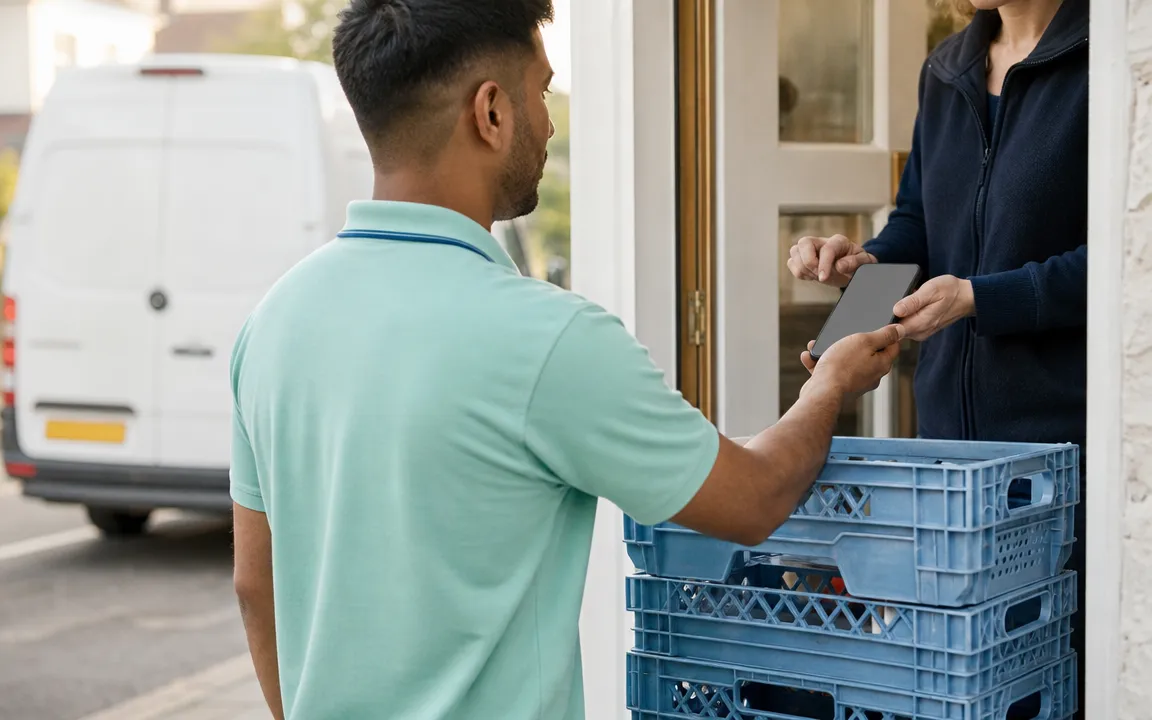
Signature, photo and geo-stamp capture in one tap, so the POD PDF emails before the driver leaves, and returns (damaged or end-of-season) raise a credit note against the original order on the spot.
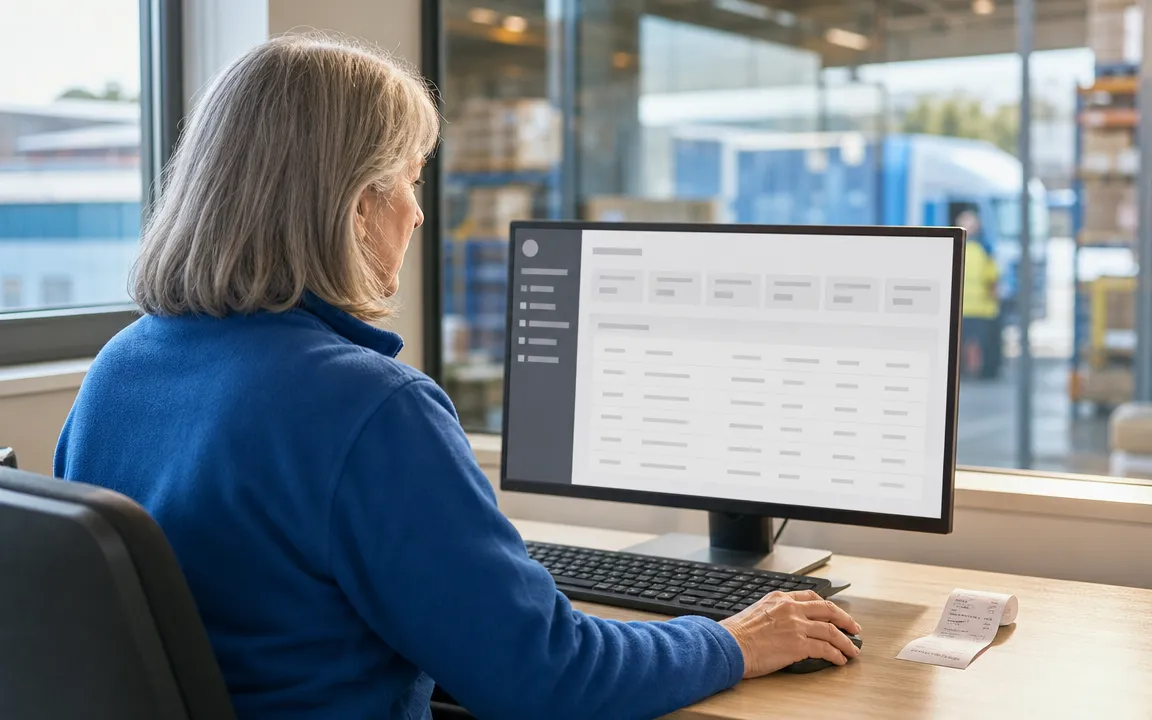
Invoices and payments post to AR/AP order-to-cash with no re-keying through the peak, and MTD VAT and multi-company sit in the ledger or sync to Sage, Xero, QuickBooks, Tally or Zoho.

Live dashboards across the season let you drill from the headline to the single order, while forecasting reads 90+ days of history so the warehouse stops running out of Christmas designs.
Sector-typical results from RouteMagic customers running range-driven, multi-channel distribution.
Bits ‘N’ Bobs supplies household essentials, stationery, vaping products and mobile-phone accessories to convenience stores across the North West, with reps restocking and merchandising spinner stands on every call. Before RouteMagic, stock control on the vans was largely trust-based and shrinkage stood at 14%. With Van Sales Management, live van stock and Route Monitor in place, the team now sees every transaction in real time, reps reconcile cleanly at end of day, and the office has a single source of truth across every territory.

Capture trade-show, rep, portal and D2C orders on one backbone, with MOVs and Source flags.

Deep SKU control across 1,000+ designs with multi-barcode and Product-Group curation.

Seasonal demand forecasting, route optimisation and end-of-day auto-reconciliation.

Merchandiser rounds that restock spinner stands and invoice on the spot, sale-or-return ready.
The questions card publishers, giftware wholesalers and stationery distributors ask us most often during evaluation.
Most run a single piece of gifting software: a wholesaler software platform that combines a deep product catalogue, multi-channel order management, warehouse picking, dispatch and accounting in one place. RouteMagic is built for exactly this: card publishers, giftware wholesalers and stationery distributors capture trade-show, rep, portal and D2C orders on one backbone, then run the range, the round and the ledger from the same system instead of stitching several tools together.
Reps work the stand on a tablet with the full range, the buyer’s own trade prices and their credit position on screen, and the order is written against the real customer record rather than a pad. Orders taken on the stand land in the same pipeline as telesales and the portal, so nobody re-keys a week of Spring Fair afterwards.
Yes. Set the requested despatch date on the order and it sits in the forward book until its window opens, so the Christmas range is committed early and picked in season. The forward book also feeds forecasting, so production and buying see committed demand rather than guessing at it.
Set a par level per stand and the rep or driver counts what has sold on each visit, tops it back up to par, and the customer is invoiced for what actually went through the till rather than for the stand. The stock stays on your books until it sells, and you can see which stands are earning their floor space.
Yes. The catalogue is organised by Brand, Class and Variant, with Product Groups giving you a many-to-many tagging layer (“Christmas 2026”, “Premium Handmade”) and Product Lists curating “New In” or customer-specific selections. Field reps and indie buyers browse the same hierarchy on the mobile app and in the Client Portal, with custom-field filters and Favourites for fast reorder.
On-App Surveys are designed in the back office and assigned to delivery points, customer groups or routes. The rep sees a Surveys tab on the Service Customer screen; question types include single- and multi-choice, numeric, free text, date, photo capture and signature; conditional questions appear or hide based on previous answers; and required surveys can be enforced before the visit can be completed. Photos and responses sync to the ERP and appear in the Survey Report.
Yes. Presentations are image slideshows attached to a catalogue (new-product launches, seasonal collections, brand storytelling, merchandising standards) pushed straight to the rep’s tablet for use during the customer visit. Resources can sit alongside the presentation for backing documents (line sheets, trade-show specs, MSRP cards).
AI demand forecasting reads 90+ days of sales history per product to predict the next 30 days, with min/max recommendations feeding suggested purchase orders and a shortfall report. Standing Orders pre-commit the base reorder cadence so the warehouse doesn’t run out of Christmas designs at the wrong moment, and Product Groups make it trivial to see “everything Christmas” across the catalogue at a glance.
Reps capture opening orders against the buyer’s contracted price list and MOV directly in RouteMagic at the show; telesales agents close the long tail with the same order workflow back in the office; and the Client Portal lets indies place repeat orders themselves between trade shows, all landing in the same sale-order pipeline with a Source flag (TS, TX, CP) for clean reporting.
Yes. Order Management captures opening orders at the show, field-rep and telesales orders, Client Portal orders placed by indies themselves, and D2C web orders, all writing to one customer master and one sale-order pipeline with a Source flag (TS, TX, CP) for clean reporting. Pricing, MOVs, promotions and credit apply the same way whatever the channel, and the same pipeline feeds both the trade van round and the D2C last mile.
Either. RouteMagic has a built-in accounting layer: sales and purchase ledger, nominal ledger, cashbook and bank reconciliation, MTD VAT, multi-company and multi-currency. If you prefer to keep your package, a configurable connector syncs invoices, credit notes, payments and customers to Xero, QuickBooks, Sage 50, Sage 200, Tally, Zoho Books and Microsoft Dynamics 365, with field and tax mapping and its own sync log for audit.
A configurable accounts-package connector syncs invoices, credit notes, payments and customers to Xero, QuickBooks, Sage 50, Sage 200, Tally, Zoho Books and Microsoft Dynamics 365, with field and tax mapping and its own sync log for audit.
Thank you
Your request has been received.