What limit to log against
In England, Wales and Northern Ireland, chilled food must by law be kept at 8°C or below, and in Scotland that is recommended. Government guidance also advises setting fridges to 5°C or below, to leave room for the temperature to move. Some products need colder, so the manufacturer’s storage instruction comes first. In Ireland, take your limit from your own food safety management system.
Write your limit at the top of the log. A reading means nothing on paper unless the sheet says what it was checked against.
How to use the log
- Before loading, run the checks at the top. The fridge unit should be on and down to temperature before the first case goes in. A cold load in a warm van starts the day out of limit.
- Take the first reading at loading, with the time, before the van leaves the depot.
- Read at your set interval through the round. Write the interval on the sheet. The display shows the air temperature, which jumps when doors open, so read it with the doors shut.
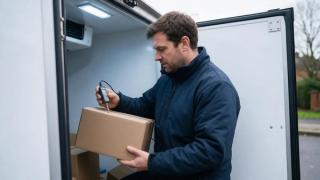
- Probe the product when the air reading is high, or when a customer asks. Probing between packs, rather than piercing one, keeps the product saleable.
- Read at each chilled drop you deliver, so every delivery has a reading near it in time.
- Write the action for every out-of-limit reading. What was checked, who was told and what happened to the stock. A high reading with no action beside it is the line an auditor asks about.
- Take a last reading on return, sign, and file the log with the day’s delivery notes.
Chilled delivery temperature log
One vehicle, one day. Air = the unit’s display. Product = a probe reading between packs.
Before loading
| Check | Yes | No |
|---|---|---|
| Fridge unit switched on and down to temperature before loading | ||
| Display reading within limit before the first case goes in | ||
| Doors close fully and seals are intact | ||
| Probe clean, working and in the cab |
Readings
At loading, at each set interval, at each chilled drop and on return.
| Time | Where (depot, or customer at a drop) | Air °C | Product °C | In limit? | Action if not | Initials |
|---|---|---|---|---|---|---|
Sign-off
When a reading is out of limit
Your food safety plan should already say who decides what happens to the stock, and the log should show that the plan was followed. In practice, the driver checks the obvious first: a door left open, a seal, a unit switched off, or air blocked by an overloaded van. Then the driver probes the product and rings the person named in the plan before the next chilled drop.
A log is one part of the evidence. Our guide to cold chain evidence from depot to door covers joining the readings to the delivery record, and the gaps that show up only when a customer or auditor asks.